Ocean Journal
The CoastX Ocean Journal
Blue Art: Where the Ocean Becomes the Studio
The Ocean Journal was written by Ana Brunette as part of her Summer Internship with CoastX.
At CoastX, students don't just learn about the ocean; they experience it firsthand. Through immersive programs that blend science, exploration, creativity, and adventure, middle and high school students are encouraged to step outside the classroom, embrace curiosity, and discover new ways of understanding the world around them. Whether they are piloting an underwater ROV, examining marine life under a microscope, or sketching a coastal landscape, students learn that curiosity is one of the most powerful tools they can carry.
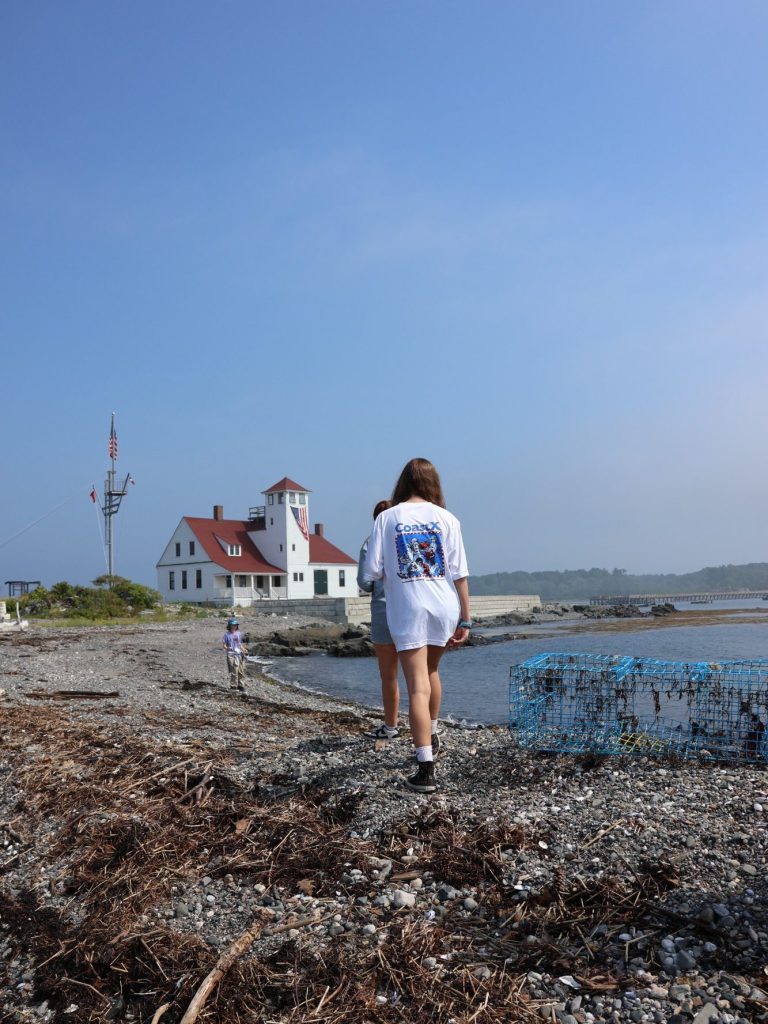
The Blue Art Program brings that mission to life by combining artistic expression with ocean exploration. Set against the backdrop of Maine's rugged coastline, students spend time on and around Wood Island using the ocean as both their classroom and their inspiration. Through a blend of art, science, and adventure, they discover that creativity often begins with observation, and that some of the best ideas come from simply paying attention to the world around them.
One of the most unique aspects of Blue Art is that students don't create from imagination alone. They create from experience.
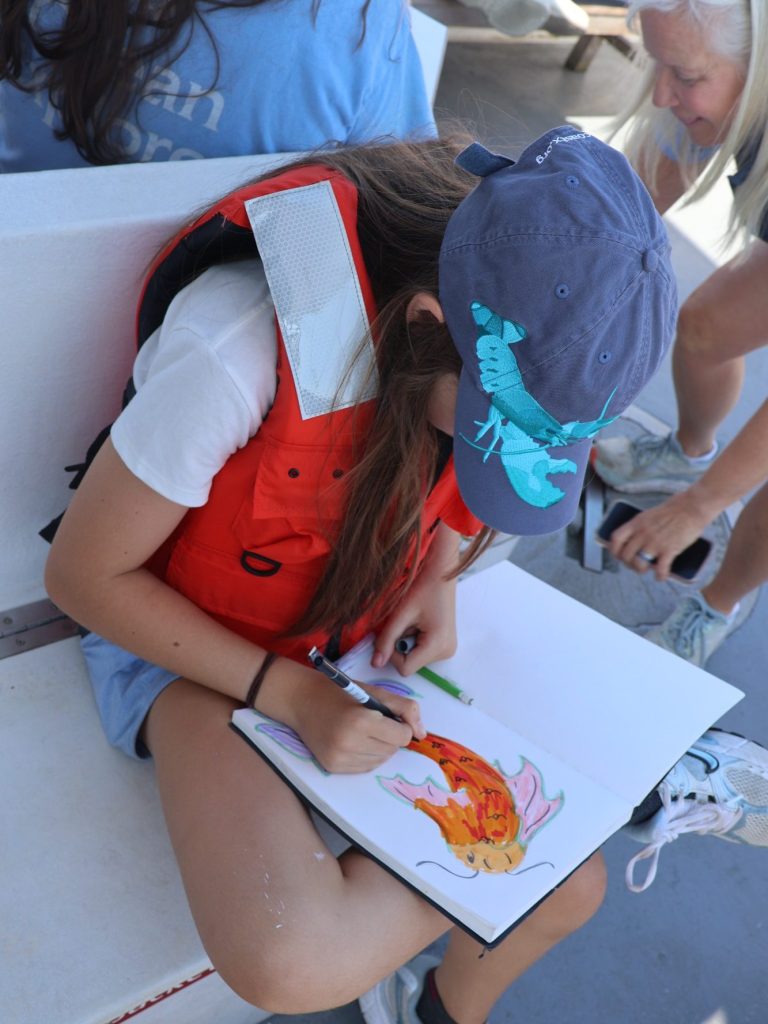
Throughout the week, students explore the island's rocky shoreline, search through tide pools, photograph coastal landscapes, and document discoveries in sketchbooks. Cameras become tools for observation as students capture details they may want to revisit later in drawings and paintings. From weathered lobster buoys to crashing waves and colorful marine life, inspiration can be found around every corner.
Painting on Wood Island Life Saving Station
Much of the artistic work takes place outdoors. Rather than sitting inside a traditional studio, students bring their watercolor sets, sketchbooks, and painting supplies directly to the water's edge. Surrounded by the sights and sounds of the coast, they practice plein air painting, a technique that involves creating artwork outdoors while observing a landscape firsthand. As the light changes across the ocean and the tides shift throughout the day, students learn to slow down, observe carefully, and translate what they see onto paper.
Much of the artistic work takes place outdoors. Rather than sitting inside a traditional studio, students bring their watercolor sets, sketchbooks, and painting supplies directly to the water's edge. Surrounded by the sights and sounds of the coast, they practice plein air painting, a technique that involves creating artwork outdoors while observing a landscape firsthand. As the light changes across the ocean and the tides shift throughout the day, students learn to slow down, observe carefully, and translate what they see onto paper.
For many students, painting on Wood Island becomes one of the most memorable parts of the week. One participant reflected, "I really enjoy being on the island and painting. It feels really special and unique." Another shared, "It's just so beautiful that we get to be on this island and paint with all these beautiful resources and being out in nature, enjoying the sunlight while we have it, and just being out here." Their reflections capture what makes Blue Art different: students are not simply creating art inspired by nature—they are immersed in it, using firsthand experiences on the island as the foundation for their creativity.
Blue Art also encourages students to look beyond what is visible on the surface. Throughout the week, they collect marine samples and examine them under microscopes, revealing intricate details that often go unnoticed. Tiny organisms, textures, and patterns become both scientific discoveries and artistic inspiration. Learning to observe closely helps students develop skills that are valuable in both art and science.
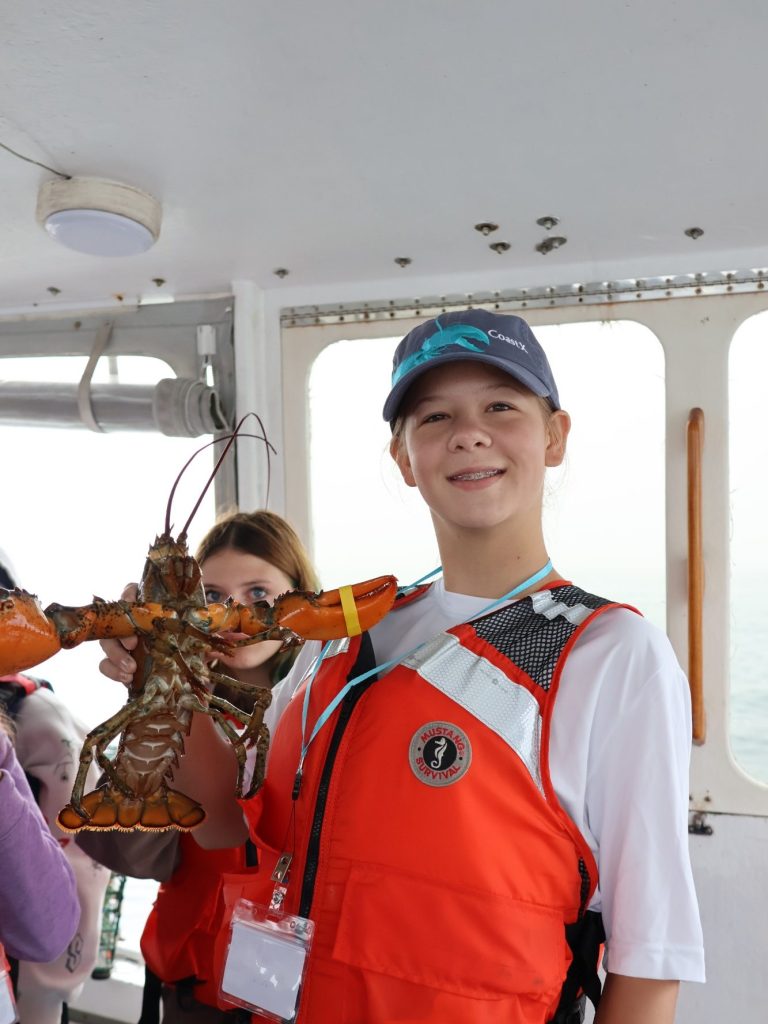
Exploration continues aboard CoastX's research vessel, the M/V Utopia. Students head out onto the water to experience Maine's marine environment firsthand. They help haul lobster traps, examine the species brought up from below, and even practice banding lobsters. For many students, it is their first opportunity to interact with Maine's working waterfront in such a hands-on way. These experiences provide a deeper understanding of the ocean and often be ome favorite subjects for future artwork.
A student holding a lobster aboard the Utopia
Students also have the opportunity to work with remotely operated vehicles, or ROVs. These underwater drones allow them to explore environments hidden beneath the surface and observe marine habitats from an entirely new perspective. Watching live underwater footage often sparks new questions and creative ideas. The colors, textures, and marine life observed through the ROV frequently make their way into paintings, sketches, and other artistic projects.
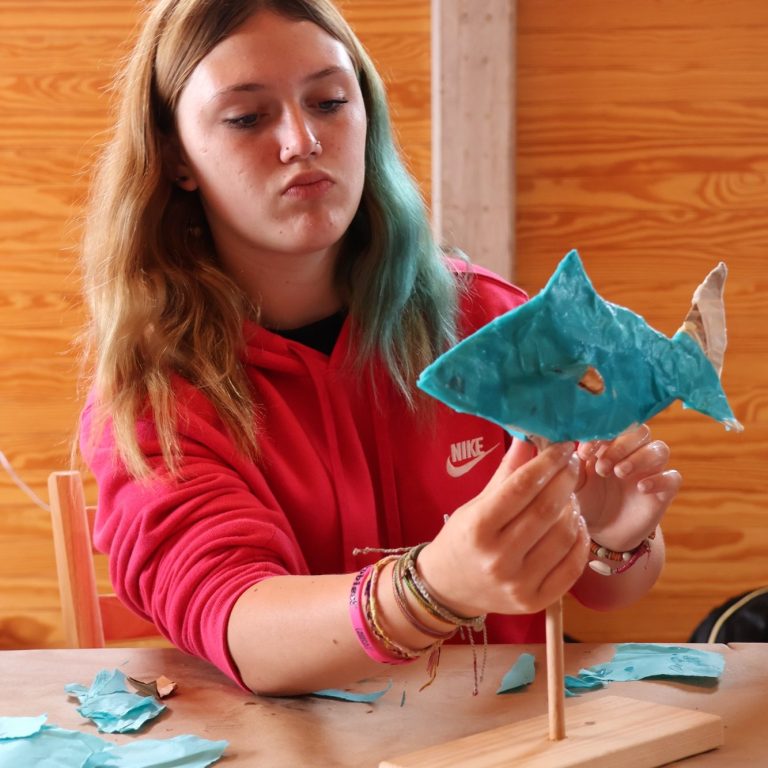
Throughout the week, students experiment with a wide variety of artistic techniques. Watercolor painting, drawing, sketching, printmaking, cyanotypes, and felt stitching all provide different ways to interpret their experiences. Cyanotypes, known for their striking blue-and-white images, offer a unique blend of art and science that perfectly reflects the spirit of the program. Each project encourages students to explore new techniques while developing their own creative voice.
A student creating a lobster print
While the artwork itself is impressive, Blue Art is about much more than creating finished pieces. Students build confidence by trying new things, solve problems through creative thinking, and form friendships with peers who share their curiosity and enthusiasm. They learn that art and science are not separate subjects but complementary ways of understanding the world around them.
At the end of the week, families are invited to a special gallery exhibition showcasing the students' work. Paintings, prints, cyanotypes, sketches, photographs, and mixed-media projects are displayed for parents and loved ones to enjoy. The gallery serves as both a celebration of artistic achievement and a reflection of the experiences that inspired each piece.
Fish sketch
For many students, seeing their work displayed in a gallery setting is a powerful moment. Each piece tells a story of exploration, discovery, and creativity. From a lobster trap hauled aboard the Utopia to a quiet afternoon sketching beside the ocean. The exhibition brings the week full circle, allowing students to share not only what they created, but also what they experienced along the way.
By the time Blue Art comes to a close, students leave with more than artwork to take home. They leave with new skills, lasting memories, greater confidence, and a deeper connection to the ocean. Most importantly, they leave with a new way of seeing the world—one shaped by curiosity, creativity, and firsthand exploration.
To read about the guest artists that guide students through different mediums of art, visit “Learning From Artists Who Bring the Ocean to Life”.
Interested in joining a future Blue Art session? Visit CoastX to learn more about upcoming opportunities for young artists, explorers, and ocean storytellers.